
Project spacer
Context
The fibre cement industry utilises spacers for the curing of fibre cement sheets in autoclaves. Spacers;
- Are stainless steel constructions that undergo high temperatures in a highly corrosive environment,
- Their surface needs to be free of defects as to assure the quality of the fibre cement sheet’s surface.
At the time, spacers were welded using conventional manual welding techniques such as
MAG-welding.
Challenge
- The high heat input that comes with MAG welding created significant local alterations of the stainless steel surface requiring, grinding and polishing.
- Additionally, the heat input of MAG welding created tensions over the spacer after welding, reducing the flatness of the surface and thus resulted in quality deterioration of the fibre cement products.
- Eventually, to reduce the overall waviness of the stainless steel surface and the local quality impact of the welds, the number of welds was reduced with MAG-welding thereby creating a fragile balance between relative quality and strength of the spacer.
Solution
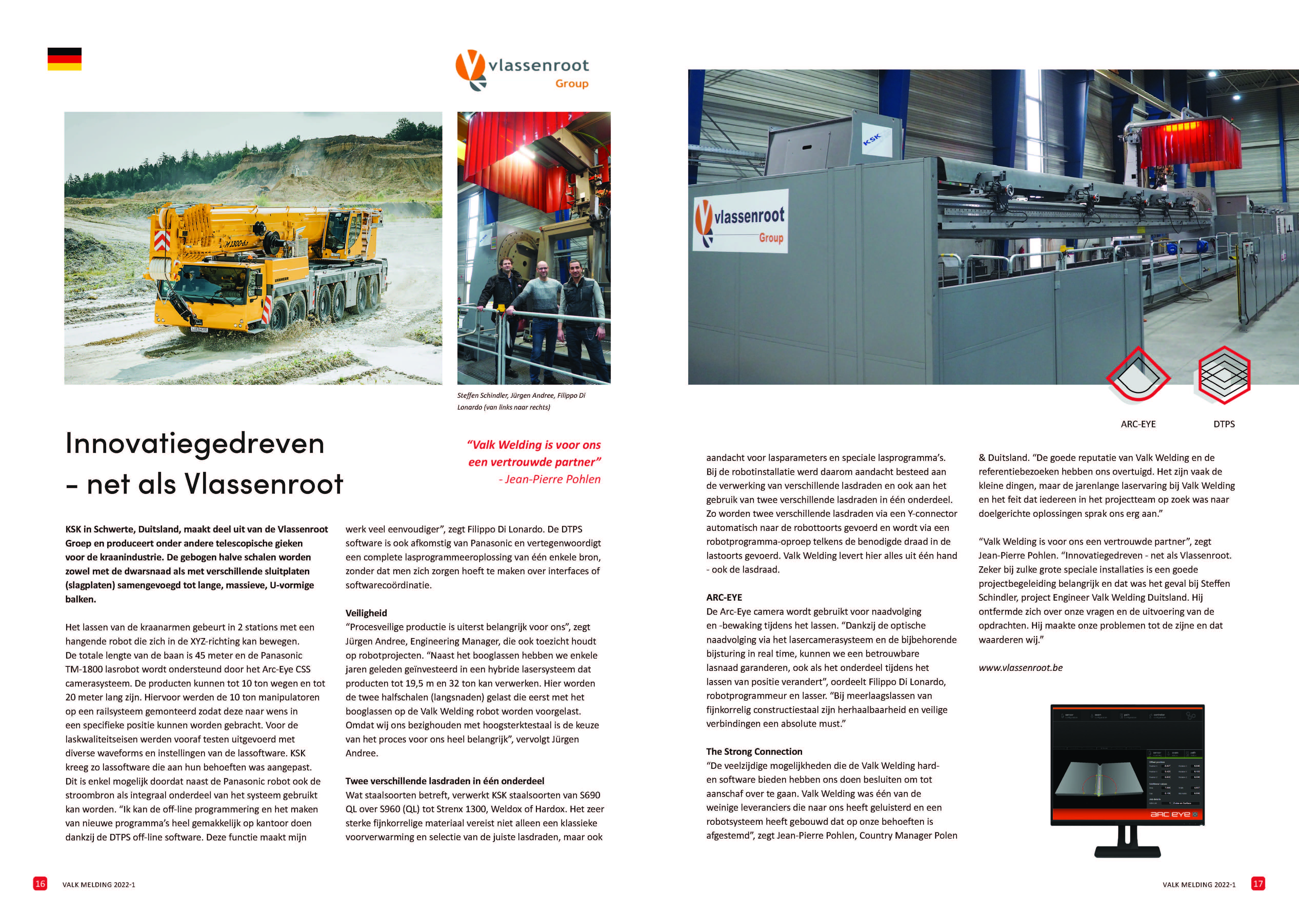
Vlassenroot was able to propose an alternative welding technique with pure laser welding using its robotic laser hybrid welding installation (up to 19,5mxXXmxXXm). The reduced heat input and increased precision of the welds enabled its customer to increase the number of welds whilst at the same time eliminate the quality issues related to manual conventional MAG-welding thereby reducing the total cost of ownership dramatically.




WE CAN DELIVER A LOT MORE. CHALLENGE US.
Vlassenroot will study your project and proposal, execute and deliver the solution that meets your expectations.